
After-hours legal intake is how a firm answers, qualifies, and books new-client calls that land at night and on weekends, and firms without it lose roughly 42% of those inquiries before anyone ever calls back.
That number stings because of who is on the other end of the line. These aren't clients checking on an existing matter. Most of them are strangers with a brand-new problem, and they picked up the phone the moment they felt scared enough to act. If you miss the moment, you usually miss the client.
Why Does After-Hours Legal Intake Matter So Much?
Think about when people actually decide they need a lawyer. It's rarely at 10 a.m. on a Tuesday. It's after a car wreck on a Friday night. It's Sunday morning after a fight that ended in an arrest. It's the quiet hour after the kids are asleep, when someone finally admits the divorce is real and starts searching.
Roughly 60% of after-hours and weekend calls come from first-time callers, which means most of your night traffic is new business, not admin. Miss those, and you're not just losing calls. You're handing your best prospects to whoever answered first.
42% of after-hours legal inquiries go missed. (Source: Legal Soft, Law Firm Client Intake Statistics 2026)
And it gets worse during business hours too. Law firms miss about 36% of all incoming calls, and 34% of those callers never try that firm again. One missed ring, and a third of them are gone for good.
What Actually Happens When You Miss an After-Hours Call?
Nothing dramatic on your end. That's the problem. There's no error message, no bounced email, no angry voicemail. The lead just quietly moves on to the next name on the search results page.
Here's what's going on under the surface.
1. Speed decides the deal, and you're asleep for it. Leads contacted within 60 seconds convert at 21 to 24%. Wait more than an hour and conversion drops under 3%. A voicemail returned Monday at 9 a.m. is already a cold lead by the time your coffee's poured.
2. Your competitors don't sleep either. The bigger intake shops and answering services like Smith.ai, Ruby, LEX Reception, Abby Connect, and AnswerConnect all sell one thing above all: someone picks up. If your line goes to voicemail and theirs doesn't, the caller has already made a choice about who seems reliable.
3. Weekends are a black hole. Saturday and Sunday get treated like dead zones, but for a lot of practice areas that's exactly when the crisis hits. Family law, criminal defense, personal injury. The phone rings hardest when your office is dark.
4. Voicemail feels like rejection. People in a legal jam don't want to leave a message and hope. A recorded greeting tells them, without meaning to, that they're not a priority yet.
5. The cost compounds. Slow response is estimated to cost the average surveyed firm about 46 clients and roughly $200,000 in revenue a year. That's not a rounding error. That's a hire you didn't make, or a marketing budget spent to generate leads you then let walk.
Leads contacted within 60 seconds convert at 21 to 24%. After an hour, under 3%. (Source: Hyperleap, Legal Client Intake Statistics 2026)
How Does AI Legal Intake Fix the After-Hours Gap?
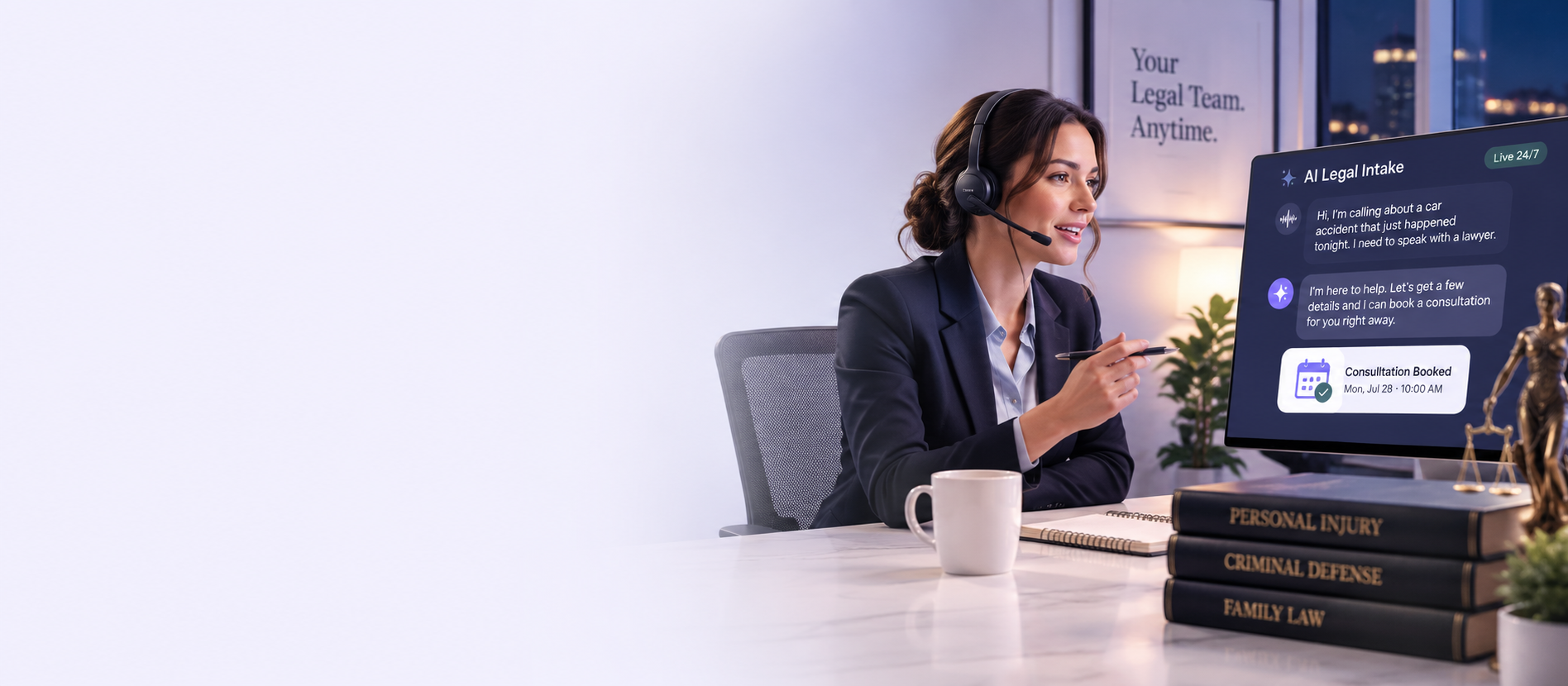
The old fix was to pay humans to cover nights, which is expensive and still leaves gaps. The newer fix is an AI receptionist that treats 2 a.m. exactly like 2 p.m. Here's what good automated legal intake does while your office is closed.
1. It answers on the first ring. Every time. No voicemail, no hold music, no "our office hours are." The caller reaches something responsive the moment they reach out, which is the whole ballgame on the 60-second stat.
2. It qualifies before you spend a minute. Practice area, jurisdiction, conflict basics, urgency. Solid AI lead qualification sorts the real matters from the wrong-number and the not-a-fit calls, so your team wakes up to a clean queue instead of a pile of voicemails to triage.
3. It books the consultation on the spot. This is where legal consultation scheduling earns its keep. Instead of "someone will call you back," the caller leaves with a time on the calendar. Momentum stays with you, not the next firm they Google.
4. It captures everything in writing. Name, number, matter details, what they said and when. Your intake staff open Monday to structured notes, not a guessing game.
5. It never gets tired or short. At the end of a long weekend, a human misses things. A virtual intake assistant asks the same careful questions on the hundredth call as the first.
None of this replaces your people. It hands them warmer leads and fewer 11 p.m. interruptions. The point of law firm intake automation isn't to sound robotic. It's to make sure nobody who needs you hits a wall at the exact moment they decided to trust a stranger with their problem.
The Bottom Line On After-Hours Legal Intake
Nearly 8 in 10 legal consumers now expect a response within 24 hours, and honestly that bar is rising toward "right now." Your after-hours window isn't a nice-to-have anymore. It's where a meaningful slice of your new clients decide whether you exist. Close the gap, and the leads you're already paying to generate stop slipping away in the dark.





.svg)