

The best AI receptionist for a law firm answers every call day and night, runs a practice specific intake, screens the lead, books the consultation, and logs it to your case system, all for a flat monthly fee instead of a per minute or per call meter. That is the short version. The longer version is what each option actually costs, and where the money quietly leaks out.
Here is the problem all of these tools are trying to solve. Clients do not wait. Clio's Legal Trends data found that only 40% of law firms actually answered their phone, down from 56% in 2019. The other side of that number is simple: most of the calls your marketing paid for never get picked up, and a caller who lands in voicemail usually just dials the next firm on the list.
The Three Ways You Can Pay to Answer the Phone
Once you decide to fix this, you are really choosing between three pricing models, and the model matters more than the brand name.
Flat monthly platform. A tool like LawPilots charges a predictable monthly subscription and handles calls with an AI voice agent. Your cost does not climb when you get busy, which is exactly when you want coverage most.
Per call, hybrid. Smith.ai answers with AI first and transfers complex calls to a live North America based receptionist. As of mid 2026, its AI Receptionist starts around 95 dollars a month for roughly 60 calls, with per call fees on top, and its human receptionist plans start around 292 dollars a month for about 30 calls, plus add on fees for booking, recording, SMS, and bilingual handling. Confirm current pricing before you commit.
Per minute, human. Ruby and AnswerConnect staff human receptionists. Ruby's published plans run from about 250 dollars a month for 50 minutes up to about 1,725 dollars for 500 minutes. AnswerConnect starts around 350 dollars a month for 200 minutes plus a setup fee. A few long intake calls a day and you are past the base tier fast.
Pricing Models at a Glance
- LawPilots: flat monthly subscription, AI voice, no per call or per minute meter
- Smith.ai: hybrid AI plus human transfer, AI plan from about 95 dollars a month, human plans from about 292 dollars a month for 30 calls, plus add on fees
- Ruby: human receptionists, per minute plans from 250 dollars (50 min) to 1,725 dollars (500 min)
- AnswerConnect: human receptionists, per minute from about 350 dollars (200 min) plus setup
The Meter Is the Real Difference
Human and hybrid services bill by the minute or by the call, so your cost scales with how busy you get. That is backwards. A great month, when the phone rings off the hook, becomes your most expensive month. A flat fee AI platform is priced the other way: the busier you are, the more value you pull from the same monthly number.
Where an AI Platform Pulls Ahead
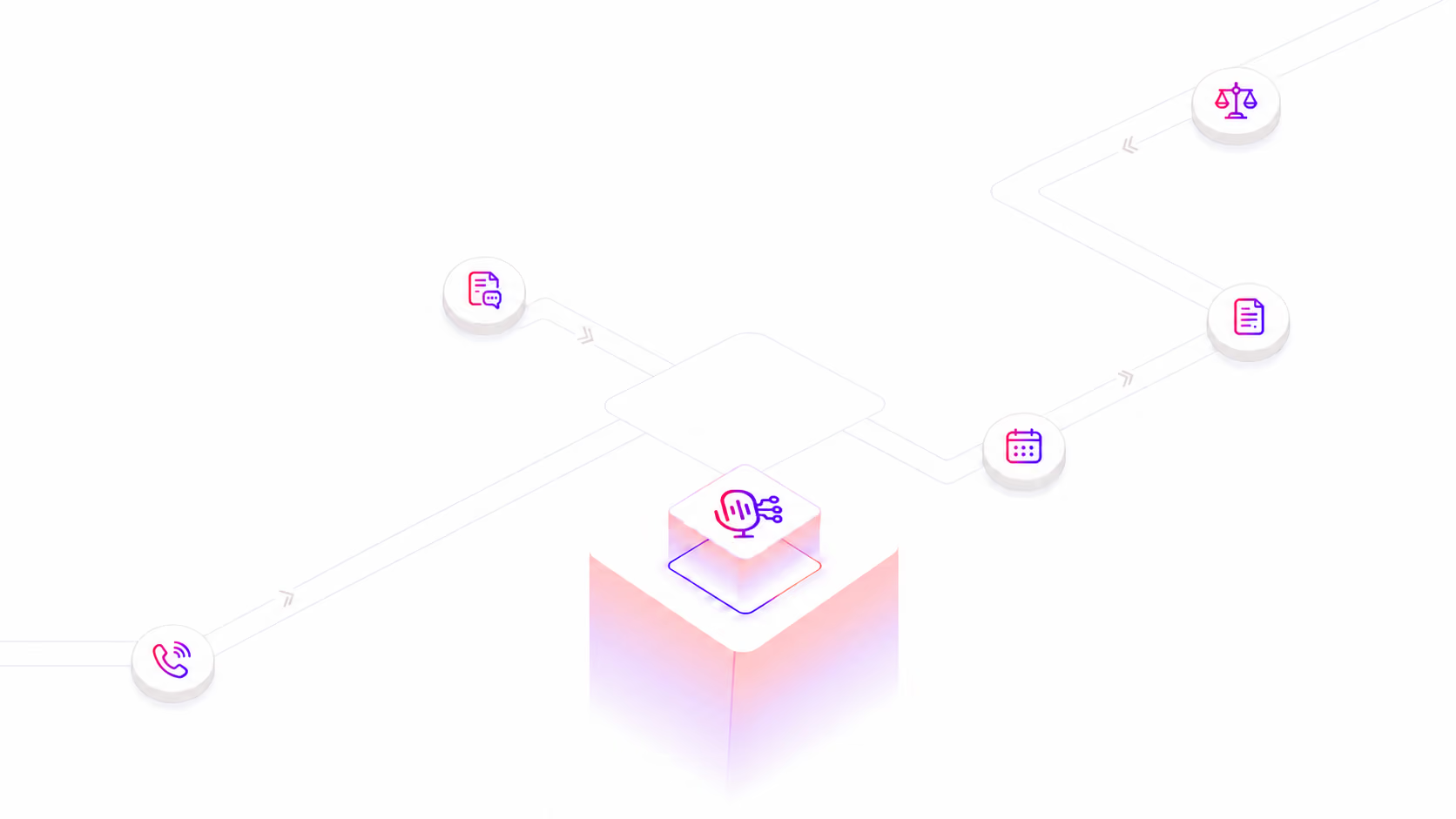
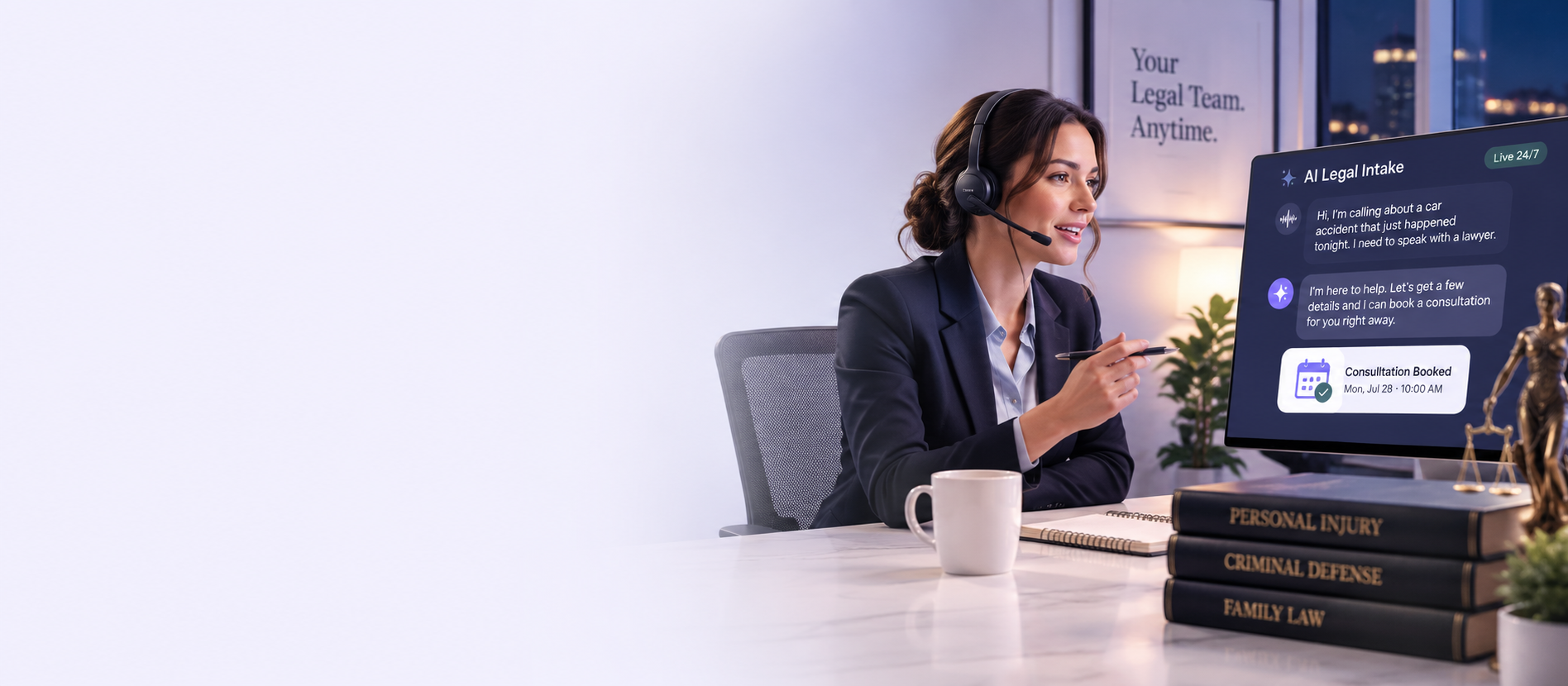
Answering the phone is where a traditional answering service stops. It is where a platform like LawPilots is just getting started. The same system that greets the caller also runs a conflict check, books the consultation, opens the matter, and hands your team a structured intake record instead of a message slip. Because high stakes actions still require attorney review and the platform is SOC 2 Type II certified, you get the speed without giving up control or confidentiality.
The honest caveat: if what you want is a warm human voice and a boutique, relationship first front desk, a live service like Ruby still delivers that in a way AI does not try to imitate. The real question is whether that warmth is worth a per minute meter and a handoff that ends at the message.
What to Actually Look For
1. Flat pricing that does not punish busy months. If the quote is per minute or per call, model your worst case volume, not your average.
2. Practice specific intake. Personal injury, immigration, family law, criminal defense, and estate planning all need different screening questions. A generic script leaks bad leads and annoys good ones.
3. Conflict checks and calendar booking built in, not bolted on. This is what turns a phone answer into an actual matter.
4. It logs to your case system. If the intake does not land in Clio or your practice management tool automatically, someone is retyping it, and details go missing.
5. After hours coverage that is truly 24/7. Injuries and arrests do not happen nine to five. Every after hours lead you miss goes to the firm that answers.
The Bottom Line
If you only need a friendly human voice, Ruby and AnswerConnect are proven, professional choices, just watch the per minute meter. If you want AI first coverage with a human safety net, Smith.ai's hybrid model is a strong fit. And if you want every call answered, screened, conflict checked, booked, and logged, then handed to a platform that can carry the matter forward, an AI receptionist built for legal work is the stronger 2026 buy. That is the category LawPilots is built for.
See the AI Receptionist Handle a Real Intake Call
LawPilots answers, screens, conflict checks, and books, then logs everything to Clio or your case system, on a flat monthly plan rather than a per minute meter. Watch it handle a live call for your practice area at https://lawpilots.ai/contact-us
Sources
Clio Legal Trends Report call answering study: only 40% of firms answered calls, down from 56% in 2019. clio.com
Smith.ai plans and pricing (mid 2026): hybrid AI plus human, AI Receptionist from about 95 dollars a month, human plans from about 292.50 dollars a month for 30 calls, plus per call add on fees. smith.ai/pricing
Ruby published plans: per minute pricing from 250 dollars (50 min) to 1,725 dollars (500 min); 24/7; Spanish during limited hours; Clio sync. ruby.com
AnswerConnect: 24/7 human agents, per minute from about 350 dollars for 200 minutes plus setup fee. getnextphone.com
LawPilots: AI voice intake, conflict check and consultation scheduling agents, Clio and MyCase integration, SOC 2 Type II, attorney review on high stakes actions. lawpilots.ai





.svg)